Three Wishes and a Prompt: The AI Peter Principle and the Limit of Human Creativity
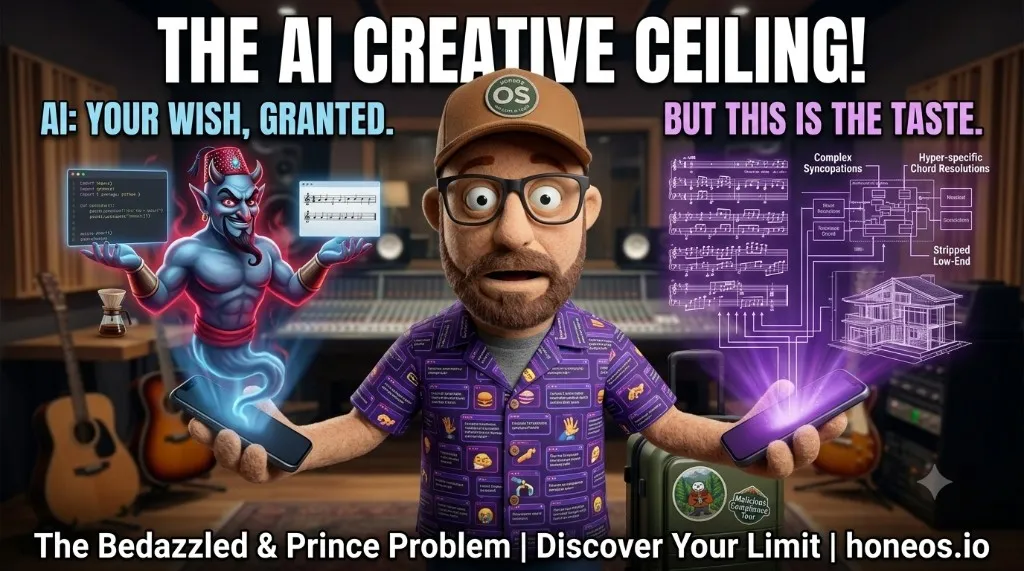
For the first time in history, we all have access to a Genie.
The lamp has been rubbed, the AI is out, and the barrier to entry for generating code, art, music, and complex business strategy is virtually zero. We all have the exact same opportunity to stand in front of this immense power and bring our most creative ideas to life. The playing field has been leveled.
But having a Genie doesn’t guarantee a happy ending. In fact, for most people, the results are going to be frustratingly flawed.
The Bedazzled Conundrum
If you want to understand the current state of artificial intelligence, look no further than the 2000 comedy Bedazzled.
In the film, Brendan Fraser plays a hapless man granted seven wishes by the devil, played with malicious charm by Elizabeth Hurley. He wishes to be rich and powerful—so she turns him into a Colombian drug lord whose cartel is actively turning on him. He wishes to be the most emotionally sensitive man in the world—so she turns him into a weeping mess who gets dumped because he won’t stop crying.
The devil didn’t technically lie; she delivered exactly what he asked for. The failure was in his lack of precision, foresight, and imagination. He simply didn’t understand the constraints and consequences of his own requests.
AI operates on this exact same wavelength. It is an engine of literal execution and malicious compliance. If you ask for something vague, it will fill in the gaps with the most predictable, average, and often useless outputs.

The New Peter Principle
There is a widespread illusion that AI is going to do the thinking for us. The reality is that AI makes execution easy, but it makes thinking harder. You are no longer just an operator; you are a director.
In traditional management, the Peter Principle states that people rise to their level of incompetence. In the age of AI, we hit our creative ceiling. We rise to our level of creative incompetence. The technology’s capability is strictly capped by our own imagination and domain expertise.
Anyone can ask a generic question and get a generic answer. But what separates the people who harness this power from those who get frustrated by it isn’t technical skill. It is the ability to articulate complex constraints, envision a finalized architecture, and know exactly what questions to ask.

The Prince Problem: The Limit of Taste
To understand how hard this ceiling is, imagine standing in front of our AI Genie alongside the late musical icon, Prince. You are both given the exact same generative AI tool and tasked with creating a masterpiece.
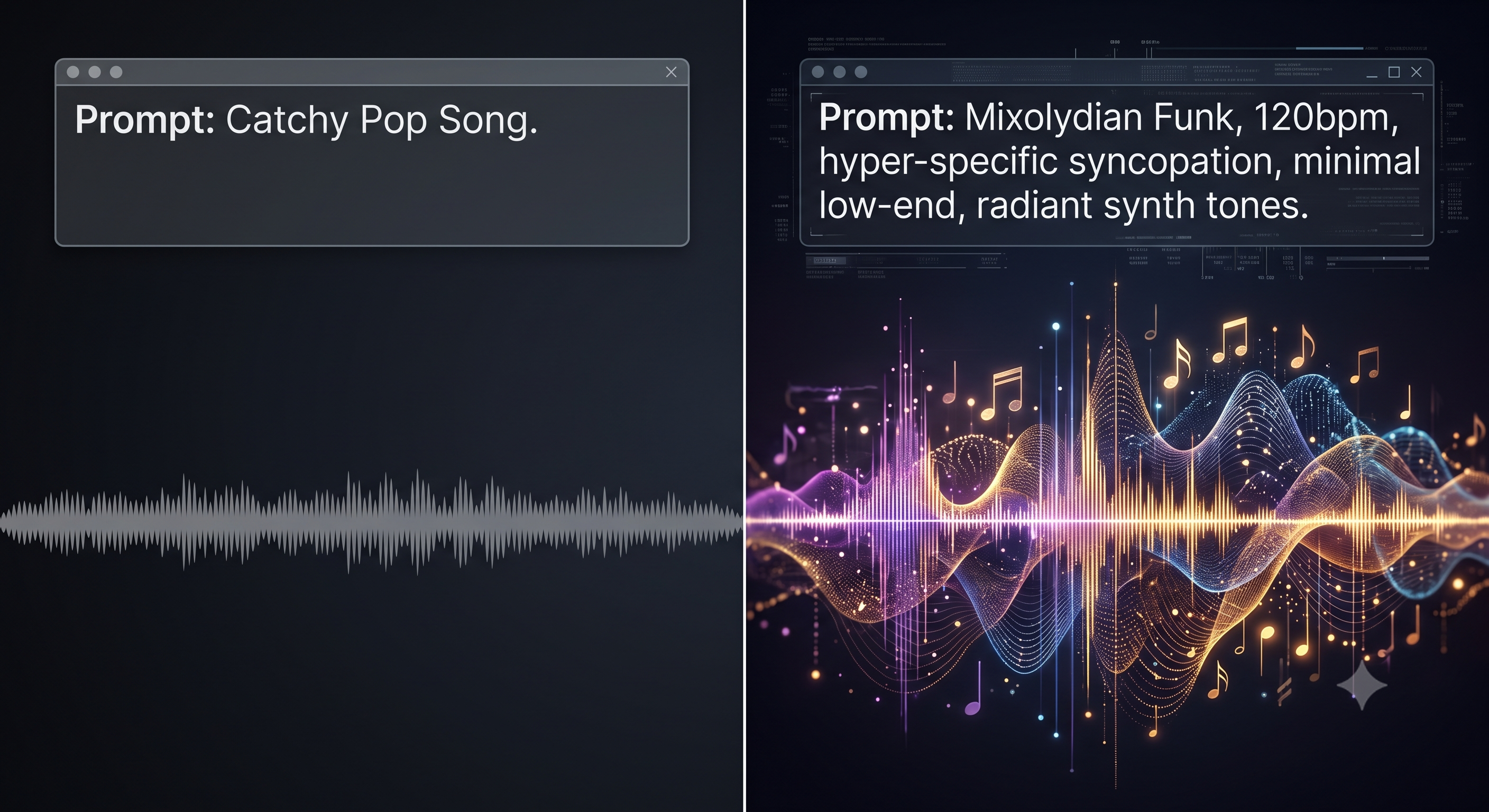
If a novice steps up to the prompt box, they might ask for “a catchy pop song with a great bassline and an upbeat tempo.” The AI will happily oblige. It will output something structurally correct, perfectly average, and entirely forgettable. The novice might hit “regenerate” a hundred times, hoping the machine will randomly spit out magic, but the results will simply be variations of average.
When Prince steps up to the interface, the dynamic shifts entirely. He isn’t asking for a “good beat.” He is demanding hyper-specific syncopations, complex chord resolutions, and an arrangement that strips away the low-end frequencies entirely to let a specific synthesizer tone breathe.
The Genie executes both requests with the exact same level of computational effort. But Prince wins every single time.
This exposes the harsh reality of the AI era: You cannot prompt what you do not understand.
There is a pervasive illusion that infinite iteration equals eventual greatness. We assume that if we just keep re-prompting the AI, we will eventually stumble into brilliance. But a million novices hitting “regenerate” on a music AI will never output Purple Rain. They lack the technical vocabulary to ask for it, and more importantly, they lack the refined ear required to recognize it even if the machine accidentally produced it.
The AI can render the notes, write the code, or generate the pixels, but the human has to provide the taste.
Hamburger Helper vs. The Harvest
Beyond taste, there is the critical issue of vision. The AI Genie is not initially creative. It will not invent your core wish out of thin air. It cannot want something. It only tunes, refines, and executes the blueprint it is handed.
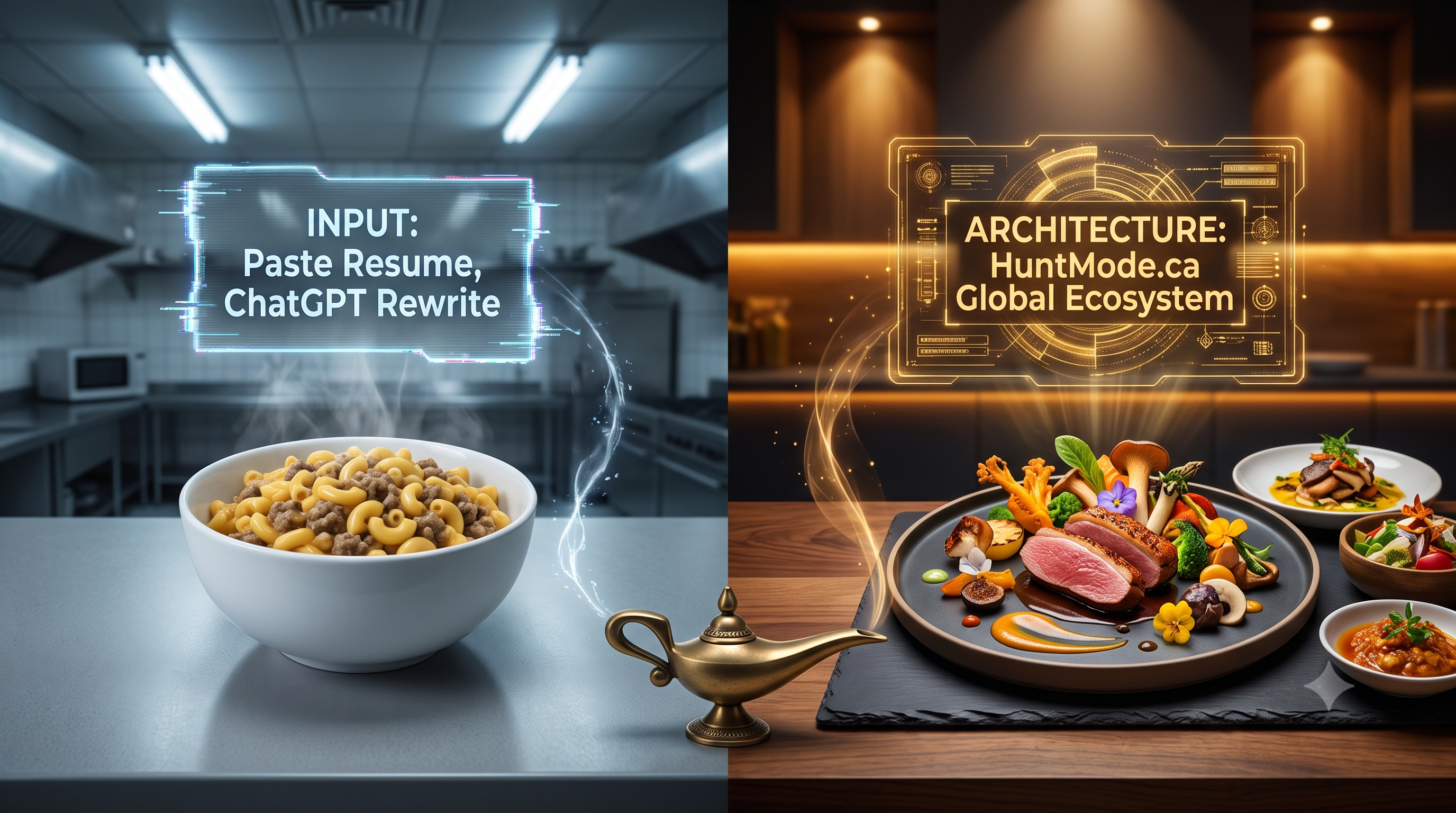
If you rub the lamp and wish for unlimited Hamburger Helper, the Genie will instantly drown you in a lifetime supply of boxed pasta. It won’t stop to suggest that designing a sustainable, fresh-food ecosystem would be healthier, more fulfilling, and better for your community. It just builds what you ask for.
To see exactly how this ceiling operates in the real world, you don’t need to look any further than how most people approach career advancement with AI.
If a novice wants to update their resume for a new role, they will copy their LinkedIn profile, paste it into ChatGPT, provide the target company’s name, and ask for a quick rewrite. Done. That is the digital equivalent of a gas station hot dog or microwaved Hamburger Helper. It is functional, but ultimately hollow.
An expert, however, will use that exact same AI infrastructure to build an entire ecosystem like HuntMode.ca—a comprehensive, free platform that orchestrates AI to act as a career coach, recruiter, editor, practice interviewer, and motivator. Instead of microwaving a cheap meal, they are flying in a pastry chef from the best bakery in France to bake the buns, while a chef from Japan collaborates with an American chef to craft the perfect patty—and then scaling that gourmet experience so it is available to anyone, anywhere, instantly.
The Genie builds both the microwaved hot dog and the Michelin-star architecture with equal enthusiasm. It takes the exact same amount of computing power to generate garbage as it does to generate greatness. The differentiator is entirely the human’s starting vision.
Who Holds the Lamp?
The Genie is completely indifferent. It is agnostic to the quality, ethics, or longevity of the wish.
Because this technology will aggressively scale whatever it is asked to do, it is paramount that true creatives, system-thinkers, and visionaries are the ones stepping up to rub these lamps. If we leave the wish-making to people who lack imagination, we are going to end up with a world filled with automated Hamburger Helper.
The magic isn’t in the AI itself; it is in the human standing in front of it. The winners in this new era won’t be the ones with the smartest Genies, but the ones who know exactly what to ask for. why